






| Updated:
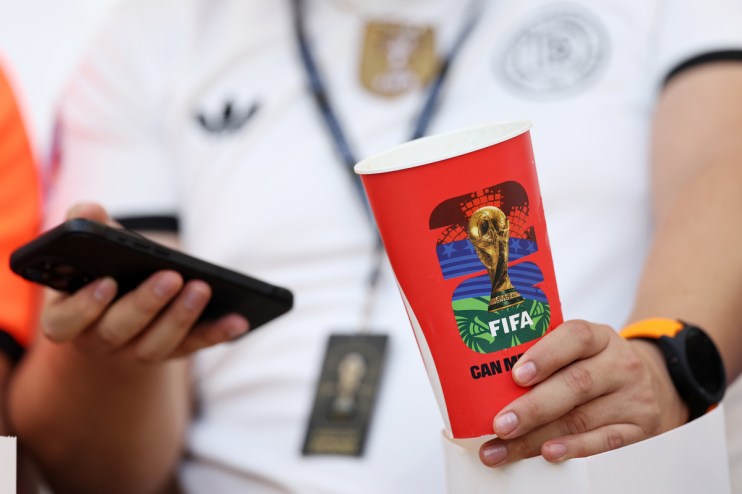
It’s not just match-going football fans who fear the financial ramifications of Fifa’s sell-off of commercial rights; World Cup sponsors could also find themselves paying more or getting less for their money, experts have warned.
Sponsors currently contribute around a quarter of Fifa’s $15bn income over a four-year cycle and include some of the biggest companies on the planet, including Coca-Cola, Visa, Aramco, Qatar Airways, Lenovo, Hyundai-Kia and Adidas.
Fifa’s plans to create a new vehicle to house all commercial rights to its tournaments and then sell off $4bn in minority stakes to private investors could, however, put it under pressure to create even more sponsorship opportunities to generate greater returns.
“This is a big changing dynamic in the commercial structure around Fifa and the World Cup, particularly if it aligns broadcasters, sponsors, and other partners within that element that they’re going to try and sell off to an investor or private equity,” Steve Martin, a founding partner at agency MSQ Sport and Entertainment, told City AM.
“From a sponsor perspective, the concern will be that prices will go up, and also dilution. If you look at Formula 1, there’s so many different layers and so many different partners and sponsor opportunities across a much bigger portfolio.
“You could see that happening at the World Cup. It’s been reasonably protected with a number of very, very big partners – top partners, like they do in the Olympics. So it could be that there’d be a much greater need for return on investment for many private equity businesses buying that inventory.”
Dilution of value would be a bigger concern for the major partners, who include the brands mentioned above, Martin added. Fifa’s second-tier sponsors include AB InBev, Unilever, Bank of America, Hisense, McDonald’s and Verizon.
Hydration breaks and half-time shows just the tip of the iceberg
Fifa cannot be accused of being slouches in the commercialisation stakes, with adverts during hydration breaks and half-time shows both introduced during this summer’s World Cup in North America and generating fresh revenue opportunities.
Ticket prices were also set at record levels but institutional investors could demand another level of asset exploitation, with initiatives like those just the tip of the iceberg, Stuart Pinnington, global head of asset owners at advisors IQ-EQ, told City AM.
“For sponsors, private investment could lead to Fifa taking a more sophisticated approach to packaging and monetising its commercial rights,” he said.
“But with that, it could create pressure to increase sponsorship fees, introduce more commercial inventory, and find new ways to monetise moments within matches and tournaments. We’ve already seen football moving in this direction with adverts during hydration breaks and greater emphasis on in-game entertainment.
“Fifa will therefore need to strike a careful balance. If it pushes commercialisation too far, it risks diluting the authenticity and excitement that make its sponsorship rights valuable in the first place.
“For brands, it’s a question of not just how much exposure a sponsorship offers, but also whether that sponsorship will remain meaningful – and in turn – commercially viable in the long run.”






+ There are no comments
Add yours