






| Updated:
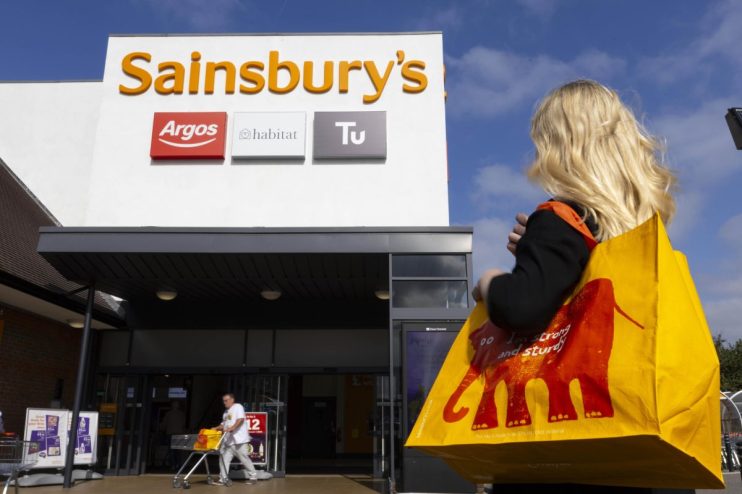
Sainsbury’s deal to sell its catalogue retailer Argos marks the latest step in the grocer’s years-long retreat from a high street conglomerate back to its core food business.
The FTSE 100 supermarket giant holds a 15 per cent market share of grocery stores, second only to Tesco.
But the firm once had a sprawling business empire, spanning thousands of sites and tens of thousands of staff across furniture stores, DIY, banking and homeware.
Its once diverse portfolio has fallen fast, with its financial arm being sold far parts, its kitchenware chain closing standalone stores, and nearly 10,000 planned job cuts over successive rounds.
Selling Argos for £120m to private equity firm Swift is just the latest chapter.
It was only a decade ago that Sainsbury’s bought Home Retail Group, which included Argos and Habitat, for £1.4bn.
At the time, Argos had 845 standalone stores, focusing primarily on different tech products, toys and household appliances. That had already fallen to 573 by the start of the pandemic.
A few months after Simon Roberts took over in June 2020, the retailer announced a further 420 standalone closures.
By the time of the sale to Swift, only 201 Argos standalones remained, with a further 466 operating inside larger Sainsbury’s stores. All 34 Argos stores in the Republic of Ireland were closed in 2023.
Russ Mould, investment director at AJ Bell, said the original purchase was a move to “diversify out of groceries.”
He said: “As often seems to be the case with UK supermarkets, Sainsbury’s has cycled between trying to cover lots of different areas and a focus on the core activity of selling food and essentials to households.”
Chris Beauchamp, chief market analyst at IG, echoed this: “Argos had long felt like a relic of the previous plan for Sainsbury’s, one that has been superseded.”
Habitat, who focus on furniture and home accessories, has followed a similar trajectory.
It came with the 2016 Argos deal as three standalone stores and 84 mini-shops inside Homebase.
Sainsbury’s briefly expanded Habitat after it acquired it in 2016, opening two more standalones in 2018, but by 2020 it was back down to three. By 2023, all were closed leaving only small in-store branches and online sales.
The cuts have come with a heavy human cost as well.
Roberts’ 2020 closure of standalone Argos stores and Sainsbury’s meat, fish and deli counters cost 3,500 jobs.
A further 1,400 followed in 2023 with the closure of two Argos warehouses, completed in 2024. Another 1,500 roles were put at risk that year as bakeries and a call centre closed.
In 2025, Sainsbury’s shut all 61 remaining in-store cafés, patisseries and pizza counters, cutting 3,000 more jobs.
This February, a further 300 jobs went as the tech team and Argos deliveries were restructured, bringing total planned cuts to 9,700.
Financial business break-up
The financial arm has been dismantled piece by piece.
NatWest bought Sainsbury’s Bank’s personal loan, credit card and retail deposit business for £125m in 2024, with Argos Financial Services’ credit cards sold to NewDay Group.
At the time, Sainsbury’s said ATMs, travel money and insurance were not being sold, calling them capital-light, profitable, and closely tied to its core retail offer.
That didn’t last long, as three months later, its 1,370 ATMs were sold to NoteMachine.
In 2025, travel money went to Irish firm Fexco, and Allianz UK took over car and home insurance for existing customers.
That December, the Qatar Investment Authority sold its stake in Sainsbury’s, ending a near-20-year run as the grocer’s biggest shareholder.
With Argos now gone too, Sainsbury’s looks close to completing its journey back to a food-first retailer.
Its core supermarket estate has barely changed, 609 supermarkets and 885 convenience stores today, up slightly from 598 and 813 in 2020/21.
It even bought 10 Homebase stores to fit out itself as it exited standalone operations.
Sainsbury’s also used to own Homebase, but the home improvement, garden, and furniture product firm was sold in 2000, when it had 283 stores.
This had gone down to 135 stores by 2020, after Australian company Wesfarmers bought the company from Home Retail Group but fired the entire senior and middle management teams, stripping away vital local market expertise. Homebase went bust last year.
Sainsbury’s isn’t alone in retreating to its core.
Tesco and M&S have both sold their banking arms to Barclays and HSBC respectively.
Tesco is exploring an exit from Hungary, the Czech Republic and Slovakia.
M&S is focusing on becoming customers’ weekly food shop venue, with plans to close larger clothing stores and shift sales online.
Yet the pull to diversify hasn’t vanished entirely. Sainsbury’s launched Smart Charge for EVs in 2024, and Tu and Habitat still exist within its bigger stores.







+ There are no comments
Add yours