


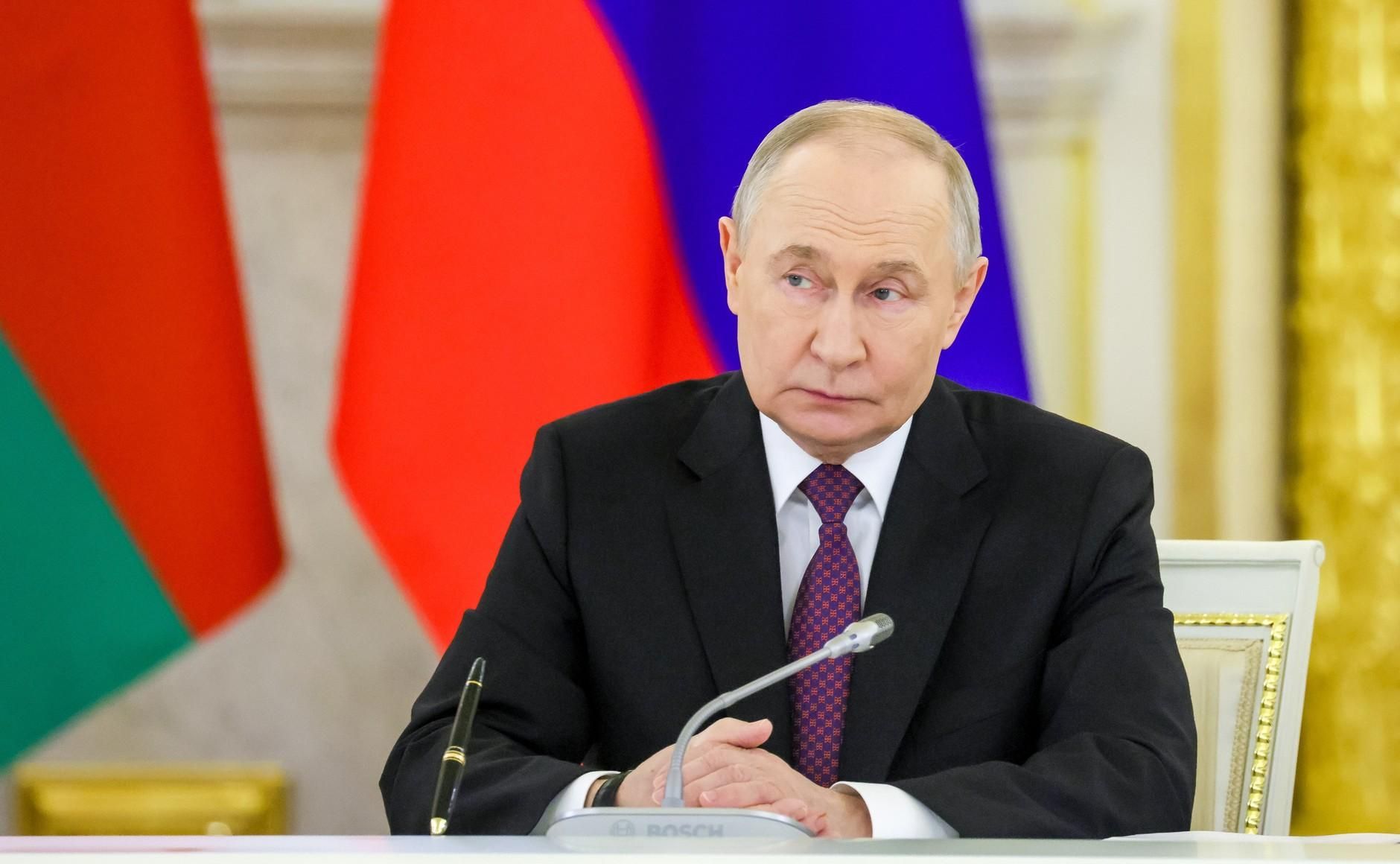
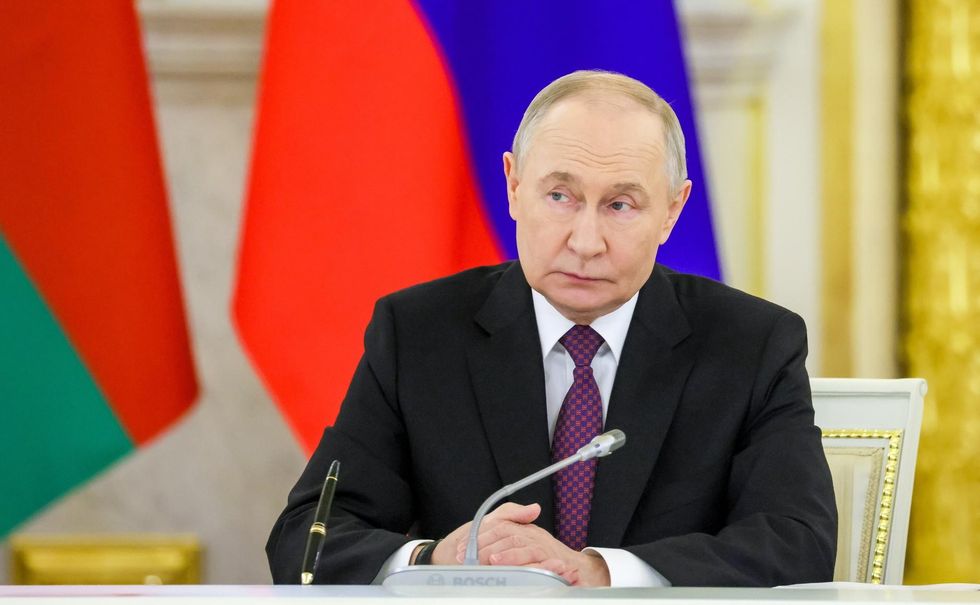
Given the uneven course of the Russian economy during the first five months of 2026, Russian authorities, especially President Vladimir Putin, were keen to minimize the impacts of any possible stagnation at the 29th St. Petersburg International Economic Forum.
When asked by a reporter about Russia’s stagnating economy, Putin avoided a detailed response and paraphrased American novelist Mark Twain, saying “rumors of my death [i.e., the Russian economy] have been greatly exaggerated.”
Although Putin avoided any reference to the war in Ukraine during his plenary speech, he did address the domestic economy. According to Kommersant, Putin made clear that he did not “foresee any immediate dangers to the economy currently or in the future.” Putin added that “we have essentially come down to the same baseline that Eurozone countries have been living with for years. I am confident that our upward and forward progress is guaranteed.”
However, this opinion differed from the recent GDP growth estimate released by his own Ministry of Economy (MinEcon), which projected stagnation for the remainder of the year. In May, the ministry created concern when it lowered its growth estimate from 1.3% to 0.4%.
It is important to note that there has been some disagreement with Russian growth projections. For example, in contrast with MinEcon’s figures, in April the IMF raised its 2026 GDP growth forecast for Russia “to 1.1% from January’s estimate of 0.8%, due to higher oil and other commodity prices resulting from the Middle East crisis.”
As to the budget, while Putin acknowledged the deficit was growing, he clarified it was not as bad when compared with Russia’s counterparts in the West. For example, he acknowledged that Russia’s budget deficit is 2.6 % of GDP but made sure to point out that the EU’s is 3.1% and that the U.S. is 5.9%.
Putin’s attitude contrasts with some officials in Russia’s Finance Ministry and central bank, who have expressed concerns about Russia’s ability to continue to finance growing defense expenditures. Early last week, Bloomberg reported that these ministries suggest “that spending on the war in Ukraine is on an unaffordable path.” Interestingly, Elvira Nabiullina, the Russian Central Bank Chair, was absent from SPIEF after reportedly calling in sick despite being scheduled to moderate several panels.
Given the apparent difference of opinion among Russia’s leading economic policymakers, several Putin administration officials actively sought to allay concerns regarding the economy. For example, Minister of Finance Anton Suliyanov tried to smooth concerns regarding the budget shortfall when he announced that the Russian budget might add nearly one trillion rubles of revenues as a result of the conflict in the Strait of Hormuz.
In addition, Deputy Chief of Staff of the Presidential Executive Office Maxim Oreshkin reiterated Putin’s message clarifying that there are “no gaps” in the country’s economy. Meanwhile, he asserted that “the European economy has grown by 3% over the past three years, while Russia’s has grown by 10% over the same period.”
The theme for this year’s event, which ran through the weekend, was “Pragmatic Dialogue: The Path to a Stable Future.” Clearly, showcasing Russia’s stated commitment to sovereignty and multipolarity was the Kremlin’s preferred agenda.
For example, according to the Moscow Times, Kirill Dmitriev, CEO of the Russian Direct Investment Fund (RDIF), said SPIEF has now become a meeting focused on “sovereign countries” while ridiculing Moscow’s “globalist rivals” who usually attend the fashionable Davos Forum in Switzerland.
Dmitriev emphasized to the Moscow Times, an independent English and Russian-language online newspaper that “the countries of the Global South are building up their economic strength, actively moving toward partnership with Russia and will be strongly represented.”
The conference, which attracted over 20,000 guests from approximately 130 countries, has been referred to as the “Russian Davos.” In its heyday, it attracted investors and policymakers from around the globe who were interested in Russia’s growing economy. Yet the larger delegations now are from Africa, Asia, and Eurasia, while Western countries are increasingly absent since the 2022 full-scale invasion of Ukraine.
Prior to the event, Russian representatives and state media were emphasizing the return of an official delegation from the United States. However, Robert Agee, head of the American Chamber of Commerce (AmCham), dispelled any thoughts of an official delegation attending the event.
Russian media had also initially touted an official German business delegation. Nevertheless, the German news outlet DW said the only German (unofficial) delegation to SPIEF was comprised of “several lawmakers from Germany’s far-right Alternative for Germany (AfD) party.” Indeed, Russia’s Dmitriev confirmed the AfD representatives were in St. Petersburg to discuss concerns pertaining to investigations related to the Nord Stream pipeline.
Given minimal Western participation, Russian representatives instead emphasized strong relations with the Global South and BRICS, and highlighted expanded efforts to assert economic sovereignty. According to Deputy Prime Minister Alexey Overchuk, Russia has shifted its economic emphasis to the Global South and Asia, stating that “we have up to 79% of trade carried at present with these nations.”
Moreover, the forum’s Russian hosts lavished special attention on the delegation from Saudi Arabia, led by Energy Minister Prince Abdulaziz bin Salman Al Saud. Saudi Arabia appeared as the guest country at the forum this year as the two countries celebrated the 100th anniversary of the establishment of diplomatic relations. As a result, SPIEF granted Saudi Arabia special status which confers the ability to showcase its investment, export, and tourism opportunities and maintain its own national pavilion at SPIEF 2026. Saudi Arabia now joins other Global South countries that have received the honorary status during previous forums, including Qatar, Egypt, the United Arab Emirates, Oman, and Bahrain.
According to the Saudi Energy Minister, the country signed “30 different cooperation agreements, particularly in energy, education, and tourism.”
Further emphasizing Russia’s economic reorientation to the BRICS and the Global South, Uzbek President Shavkat Mirziyoyev, Tanzanian President Samia Suluhu Hassan, and Chinese Vice President Han Zheng appeared on stage with Putin for a roundtable after his keynote speech on June 5.
During the speech, Putin said the “existing hierarchical model of global trade and cooperation is undergoing profound changes.” This statement referred to his assertion that the current global economic model is in the midst of a significant transition towards multipolarity and that BRICS countries are driving this growth.
Furthermore, Putin stated, “If you look at the global GDP of the last five years, you will see that almost half of its annual growth, 49%, is accounted for by BRICS countries. The contribution of the so-called G7 is estimated at 18%.” He then cited estimates from the International Money Fund (IMF) and World Bank that predicted economic growth for the G7 countries at 0.5% through the end of the current decade compared with over 4.1% for BRICS countries.
Judging from these responses, critics of SPIEF 2026 could rightly assert that Russian authorities did little to clarify the condition of Russia’s economy. However, they may be missing the objective of this year’s event.
Ultimately, it is important to understand Russian officials used SPIEF 2026 to strategically shift focus from a global investment event focused on the Russian economy to a gathering focused squarely on asserting Russia’s economic sovereignty and commitment to strengthening the course of multipolarity with its partners in the BRICS and Global South countries.
Additionally, they sought to lay the groundwork for a successful BRICS Summit in India in September. Thus, SPIEF 2026 was not selling the Russian relationships and deals of the past, but rather a strategic vision for a new global order during a time of great uncertainty.
From Your Site Articles
Related Articles Around the Web

+ There are no comments
Add yours