







| Updated:
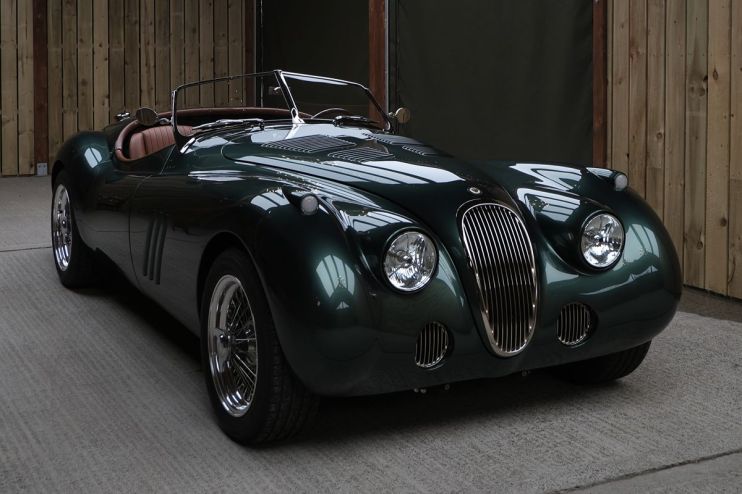
In many ways, the XK European GT is the antithesis of Jaguar’s new Type 01. Classically curvaceous rather than brutally slab-sided. Petrol rather than electric. Compact rather than colossal. Mechanical rather than digital. A celebration of the past, instead of a moonshot at the future.
“The term ‘restomod’ drives me mad,” says Simon Thornley, co-founder of Thornley Kelham and programme director for the XK European GT. “It covers everything from a £3 million Singer 911 to some quite basic modifications. What we have created here pays homage to the Jaguar XK120, but it’s more than just a restomod. This is essentially a built-from-scratch new car.”
Located in the Cotswolds, Thornley Kelham has been restoring classics to concours standard since 2008. More recently, it has branched out with a diverse range of restomods (sorry, Simon) that take a “respectful and holistic” approach to upgrading older cars. So far, the company’s ‘European’ collection comprises the Porsche 356, Porsche 911 and Lancia Aurelia, along with coupe and roadster versions of the XK120. You can read my reviews of the wild 911 European RS here and roof-chopped Aurelia B20GT ‘Outlaw’ here.
Jaguar XK120: A great British sports car
Back to the XK120: it debuted in 1948 as arguably the first great postwar British sports car. Glamorous and rip-roaring, it also proved itself a winner on racetracks and rally stages. In May 1949, a prototype achieved a timed two-way average of 135mph on a closed motorway in Belgium – making it the world’s fastest production car at the time. Although somewhat eclipsed by the E-Type since, the XK120 set a template for sporting Jaguars that endured for decades to come.
The European GT is based on the later and less valuable Jaguar XK140, although few parts beyond a donor car’s steel chassis are carried over. Indeed, every body panel is new: hand-made from aluminium in-house using traditional tools such as an English wheel, then seam-welded for extra strength. The styling is by Paul Howse, whose previous efforts include both the McLaren P1 and Lanzante 95-59 hypercars.
Lift the Jaguar’s long, louvred bonnet and you’ll find a brand new all-alloy 3.8-litre straight-six built by Crosthwaite and Gardiner, its chrome cam covers polished to a mirror finish. The engine is offered in 300hp or 360hp outputs – both of which seem adequate with only 1,180kg to shift – and drives the rear wheels via a five-speed Tremec manual transmission. No performance figures are quoted, but reckon on 0-62mph in less than 5.0 seconds, plus a top speed that will comfortably exceed the 135mph recorded in 1949.
Built to order: Chassis, brakes and price
To keep this potentially lively show on the road, Thornley Kelham fits uprated four-piston disc brakes and swaps the OE recirculating ball steering for a Quaife rack-and-pinion setup. The XK’s suspension is also completely redesigned, with aluminium double wishbones in place of torsion bars at the front, and trailing arms rather than leaf springs and a live axle at the rear. Intrax coilovers and Bilstein shocks provide some further modernity, with driver-adjustable TracTive dampers available on the options list.
Speaking of options, every car will be bespoke and built to order, with prices starting at around £750,000 excluding VAT and the cost of a donor car (which Thornley Kelham can source for you).
A total of 25 coupes and 25 roadsters are planned, and a build-time of approximately 6,000 hours means it will be a couple of years between placing your order and taking delivery. Worth the wait? Let’s see.
Inside the XK European GT
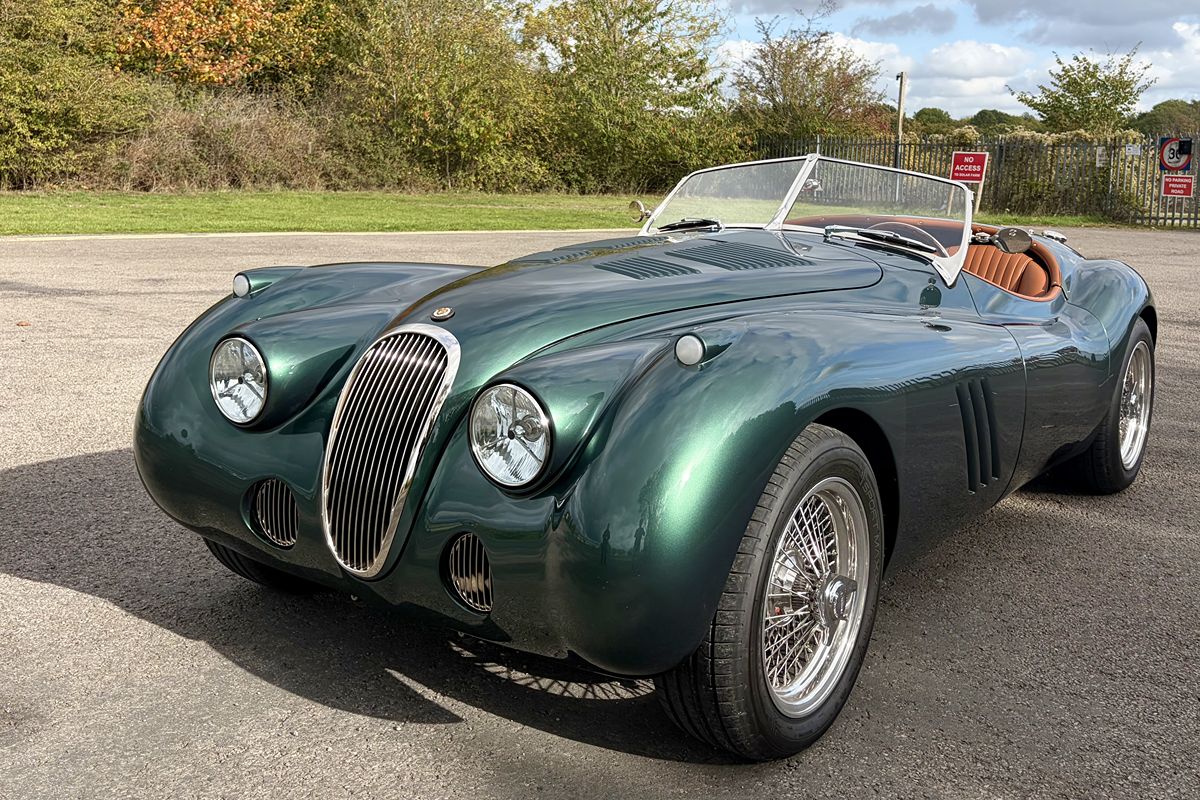
Gleaming beneath the white lights of the workshop, the European GT roadster looks like an XK120 remastered in 8K ultra-high definition. Longer, wider and more voluptuous, its familiar lines are somehow intensified: less pretty than the Sir William Lyons original, perhaps, but even more impactful – without a straight line in sight. “I took it to London and it turned more heads than any supercar,” says Alan Robb, Thornley Kelham’s chief test driver, who climbs into the passenger seat.
My favourite details? How about the peaked ridge that runs along the centre of the bonnet, then flows upwards into the split windscreen? Or the Ferrari 250 GTO-style vents cut into the front wings? The closer you look, the more you see, although even casual observers will note the roadster’s lack of a roof. Maybe this al fresco Jaguar is more suited to California than the Cotswolds…
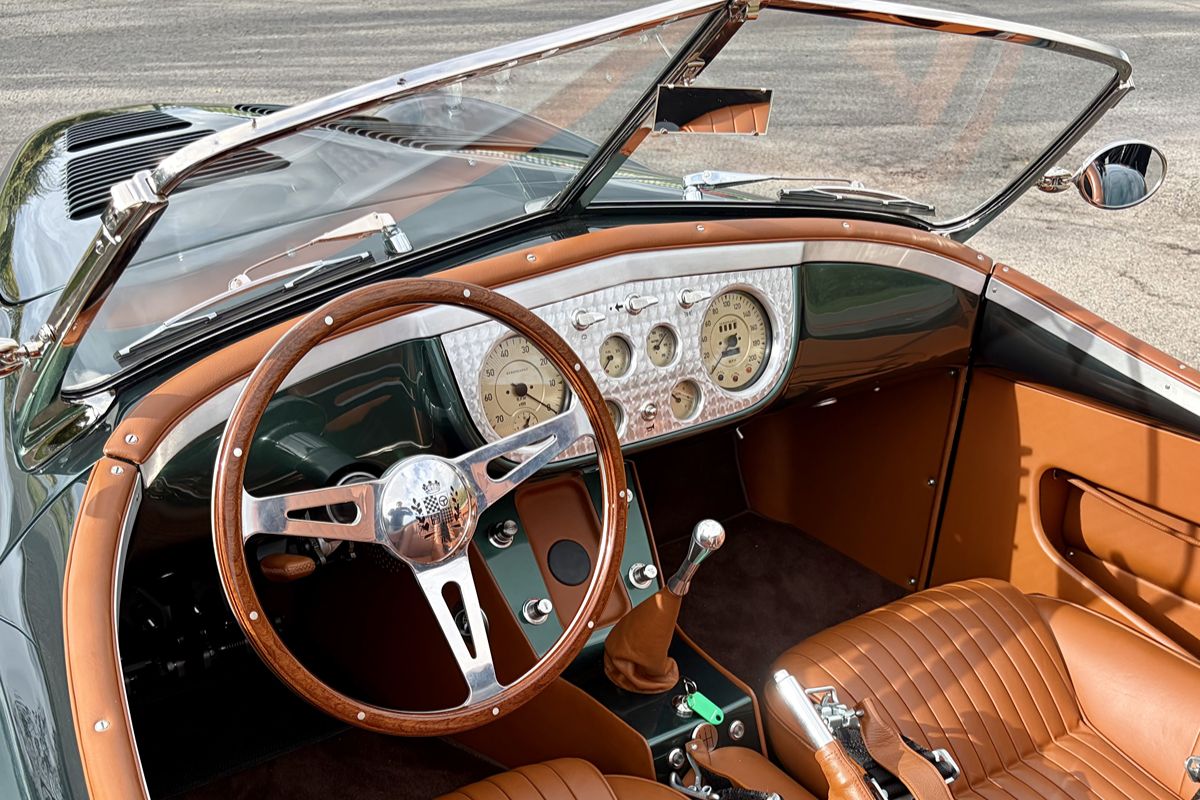
There are no door handles, either: just reach inside and tug a leather cord, then fold your legs through the slim aperture twixt wood-rimmed steering wheel and heated leather seat. There are a few concessions to the 21st century, such as a mobile phone charging tray, but not a touchscreen or slab of piano-black plastic in sight. The dashboard is an edifice of turned aluminium and the cream-faced speedo and rev counter sweep in opposing directions like an Aston Martin. It’s a bit blustery when you get going, but visibility is panoramic, your view ahead framed by the flowing front wings while the road surface rushes beneath your outer elbow. Where’s a pair of flying goggles when I need them?
On the road: The joy of a straight-six
I drove a stock Jaguar XK140 a few years ago and, while brimful of character, its road manners were rudimentary at best. The XK European GT is a very different animal. It has (optional) power steering for a start, which feels far more incisive – and at only 2.5 turns lock-to-lock, is much quicker too. There’s also no sense of body getting out of sync with the suspension, even on some typically cratered British B-roads. The whole car feels hardy and irrepressible, like it wants to be your wingman.
As the ‘GT’ in its name suggests, the XK is intended as a long-striding express – “the sort of car you’d gladly drive down to the south of France,” says Robb. Unlike Thornley Kelham’s ‘RS’ 911, this isn’t a wannabe road racer. Nonetheless, its plentiful grip and taut body control mean you can ‘make progress’ (as my driving instructor used to say) at a very respectable rate, enjoying the crisp gearshift, progressive brakes and rear-driven balance as you blast between bends.
Nonetheless, the straight-six up front is the headline act, its abundant torque (280lb ft as standard, 310lb ft in the higher state of tune) meaning you can choose to short-shift or stretch it out to the 7,000rpm redline. Use all the revs and the engine performs a Jekyll-to-Hyde switch, going from mild-mannered gent to salivating maniac in an instant. It’s wonderfully linear, yet brawny and unapologetically boisterous, the snarl of induction overlaid by the metallic pings and pops from the tailpipes.
Verdict: Thornley Kelham XK European GT
You could indeed drive to southern France, but on arrival I’d take a swift left turn towards the Alps. On the Route Napoleon or the Col de Turini, I can’t imagine many cars providing a richer sense of occasion.
As Jaguar enters its brave new world with the Type 01, this deliciously retro XK is a reminder of what made it a beloved brand in the first place.
Yes, it’s a long way from an original XK120 (or indeed XK140), but Thornley Kelham has captured the vital, trailblazing spirit of those cars and distilled it into something that’s more energetic, easier to live with and, well, simply more modern. Just don’t call it a restomod.
Tim Pitt writes for Motoring Research








+ There are no comments
Add yours