






| Updated:
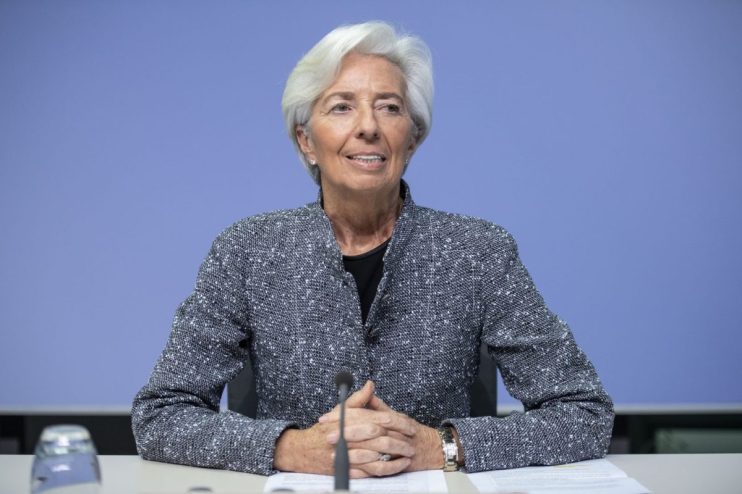
Despite her strong financial credibility and high-profile international background, Christine Lagarde faces significant hurdles in connecting with everyday voters and overcoming deep-seated political divisions if she runs for the French presidency against Marine Le Pen, says Helen Thomas
Christine Lagarde once declared that the European Central Bank (ECB) was “not here to close spreads”. She may soon discover that closing the gap between France’s political centre and its voters is an altogether harder task.
We now know that she will be leaving the ECB in February. But what will she do next? She said that she was leaving early “to have the freedom of speech, the freedom of expression and the freedom to engage on matters that are not monetary policy matters”. She has previously ruled out running for the French Presidency but the timing would enable her to enter the contest.
But there is still time for France to become her problem in Frankfurt before she decides whether to make it her problem in Paris. The premium investors demand to hold French rather than German government debt has reached levels last seen during the eurozone debt crisis. Quite the backdrop for a Frenchwoman preparing to leave Europe’s most powerful financial institution.
The ECB’s Transmission Protection Instrument exists to counter disorderly market moves that impair monetary policy. But it comes with conditions, including fiscal sustainability and compliance with European commitments. Distinguishing an unjustified market panic from a justified reassessment of French political risk could become an uncomfortable exercise. Central bankers can buy bonds but they cannot manufacture parliamentary majorities.
France’s budget history demonstrates the difficulty. Its last three state budgets have involved Article 49.3, the constitutional mechanism allowing a Prime Minister to push legislation through without a vote unless MPs bring down the government. Michel Barnier discovered the danger when his use of it on the social-security budget precipitated his downfall in December 2024.
The Macron inheritance
Next spring brings a new president, but no guarantee of a solution. Emmanuel Macron cannot serve a third consecutive term. The constitution leaves open a later return, should France eventually develop a nostalgic affection for him. For now, the more pressing question is who inherits his political territory.
There is no shortage of applicants. There is a shortage of agreement that any one of them should get the job.
Enter Lagarde. A Cluster17 poll for Politico puts her on 14 per cent, compared with 13.5 per cent for Édouard Philippe and 11 per cent for Gabriel Attal in otherwise comparable scenarios. For someone who has not launched a campaign, matching established contenders is nevertheless an encouraging start.
Perhaps waiting is the strategy. Let the declared hopefuls exhaust themselves, fail to unite the middle ground and demonstrate the need for a rescuer. Then arrive with international stature, financial credibility and the promise of competent government.
Mark Carney has demonstrated that a central banker can reach the top of national politics without first serving a parliamentary apprenticeship. He became Canada’s Prime Minister even before winning his seat. His ascendance has shown that the journey from monetary authority to electoral authority is possible.
But Lagarde faces a particular difficulty. Her claim to be above France’s political squabbles rests on years spent at institutions far removed from its voters. The IMF and ECB confer considerable authority among people who attend international conferences. Their appeal may be less obvious to someone worried about the cost of living, immigration or deteriorating public services.
This week she will be in conversation with Andrew Ross Sorkin at Wednesday’s DealBook Summit. It’s an opportunity for her to explain what comes next. New York is an excellent place to address the international financial establishment and Andrew Ross Sorkin is renowned for writing dramatisations of the news as well as the news itself.
It is also a reminder of the world in which she is most comfortable. Rubbing shoulder pads with the Davos elite is a world away from the woes currently facing the French electorate.
The polling contains a warning. When Lagarde and the other hopefuls appear together, she falls to eight per cent. Across almost all the scenarios tested by mainstream polling companies, Marine Le Pen and Jean-Luc Mélenchon make it into the final two-way run off vote. Another distinguished centrist does not automatically produce a united centre.
For markets, the danger is that the second round offers a choice between two different challenges to the economic consensus. Investors accustomed to treating French elections as a drama that ends with the establishment prevailing may need a different script. The promise of fiscal discipline means little without the political authority to deliver it. Nor can the ECB indefinitely resolve the tension between what creditors demand and what voters will accept. Lagarde knows better than most how that tension can threaten the eurozone. Knowing the problem, however, is rather different from persuading the French public to vote for its solution.
Lagarde might yet become its champion. She could also become another candidate convinced that everyone else should stand aside, or an endorsement whose value is clearer to its recipient than to the electorate.
For investors, the temptation will be to confuse a familiar face with a safer outcome. France’s political problem runs deeper than finding someone who speaks the language of financial markets. Until someone can speak convincingly to the voters those markets fear, this remains Le Pen’s election to lose.
Helen Thomas is founder and CEO of Blonde Money









+ There are no comments
Add yours