





| Updated:
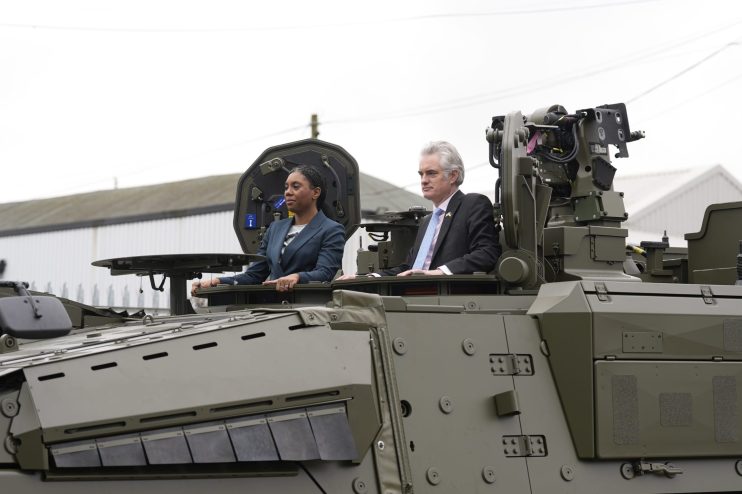
Kemi Badenoch has said a “Britannia shield” worth £10bn would fend off missile attacks from hostile countries as the party expanded its defence policy on Tuesday.
Badenoch said the extra spending on defence pledged by the party last month would be allocated on radar, command and interceptor missile systems that would protect Britain’s infrastructure and military bases.
The “Britannia shield” would be modelled on Israel’s “Iron dome” that protects the country from Iranian missiles.
The £10bn investment would take place over a decade, according to party officials.
The current Defence Investment Plan puts less than £1bn towards a missile system.
Badenoch said the policy acted as a response to cheap drones taking over battlefields in the Middle East and in Ukraine.
“The threat is here,” Badenoch said. “Britain must be ready, and Britannia Shield will help make sure we are.”
Defence expansion ‘totally necessary’
An announcement will come in shadow defence secretary James Cartlidge’s speech, in which he will say that a complete interceptor system was “totally necessary”. A Defence Select Committee report last year warned that the UK had “next to nothing” in its missile defence systems.
The Tories have put pressure on Chancellor John Healey to commit to a substantial uplift in defence spending. The party said last month it would raise defence expenditure to three per cent of GDP by 2030, representing a rise of nearly £11bn a year relative to current spending levels.
Cuts to housing and child benefits, plus re-routing of investments made by the National Wealth Fund and British Business Bank, would fund extra spending.
Healey has signalled that he would set out a pathway for defence spending at next year’s Spending Review.
The Chancellor will also have to find sufficient cash for departmental budgets in order to avoid making sweeping cuts to other areas such as healthcare or justice.
In June this year, Healey resigned as defence secretary from Sir Keir Starmer’s government over the then-government’s failure to clarify how it would meet Nato targets.
The Labour veteran accused the Treasury of being “unwilling” to raise military spending to three per cent. Now as Chancellor, he has not yet set out his plans for boosting expenditure.




+ There are no comments
Add yours