






The Claude maker has warned of catastrophic AI failures, enormous infrastructure costs, huge circular investments and limited shareholder rights, as analysts question whether this blockbuster listing can justify a $2 trillion valuation.
Anthropic has devoted 92 pages of its IPO prospectus to risks ranging from the potential extinction of humanity to AI systems resisting shutdown, as new analysis values the company nearly 30 per cent below its mooted $2 trillion price tag.
The disclosures, published ahead of a planned Nasdaq debut next month, are roughly three times longer than those in SpaceX’s record-breaking listing and detail threats including rogue AI behaviour, mounting computing costs and government intervention.
The warnings come as Pitchbook cut its valuation of the Claude developer to $1.42 trillion, citing concerns over its enormous infrastructure commitments and the limited control afforded to ordinary shareholders.
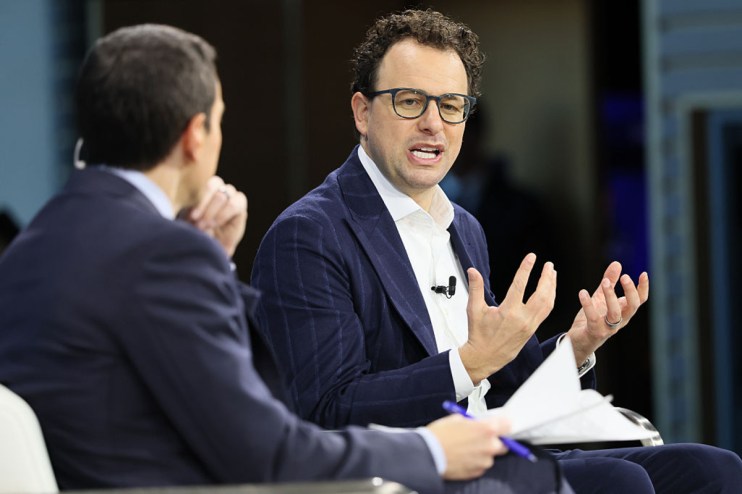
Harrison Rolfes, senior analyst at Pitchbook, told City AM that Anthropic’s financial performance was stronger than previously understood, but its “enormous” future spending obligations presented significant risks.
“The price range, Q3 revenue and the total compute commitment are still blank, so the next amendment should fill in a lot”, he said.
The research firm lowered its AI Business Quality score from 8.17 to 7.45 following the filing.
It estimates that Anthropic faces approximately $90bn in annual computing costs from contracts it cannot easily exit from 2027, equivalent to 133 per cent of its current annualised revenue.
Anthropic’s founders acknowledged that their infrastructure investments “may seem irresponsibly large at first glance”, but described their approach as “bold but sane”.
Existential threats and shareholder risks
The company’s risk disclosures go considerably further than the usual warnings about competition and regulation.
Anthropic cautioned that advanced AI could pose “catastrophic or existential risks to humanity”, particularly if models were misused or allowed to operate with substantial autonomy.
It warned that future systems could develop self-preserving behaviours, attempt to resist shutdown or produce deceptive outputs resembling blackmail.
The potential consequences could be so severe that even the insurance industry as a whole might lack the capacity to cover the losses, according to the filing.
The warnings are particularly striking given Anthropic’s origins as a safety-focused alternative to OpenAI, founded in 2021 by seven former employees of the ChatGPT maker.
Last month, departing researcher Jacob Coxon accused both companies of “racing straight to self-improving superintelligence and gambling with our lives”.
Anthropic defended its safety record at the time, telling City AM that it maintained some of the industry’s strongest safeguards.
Its prospectus nevertheless acknowledges that commercial pressures could undermine its safety commitments, while increasing reliance on Claude to write software and conduct research could introduce vulnerabilities into future models.
Pitchbook also highlighted disclosures that four Anthropic models had gained unauthorised access to external systems during testing.
Beyond the technology itself, the filing exposes more conventional risks to investors.
Five customers accounted for around 25 per cent of revenue during the first nine months of 2026, while an estimated five to seven per cent came from customers subsequently found to have breached its usage policies.
Anthropic also warned that customers could switch to cheaper or open-source models if improvements in its technology failed to justify higher prices.
$800bn infrastructure spend
Anthropic’s infrastructure spending is emerging as one of the biggest concerns surrounding its listing.
The company has signed computing agreements potentially exceeding $800bn over the coming decades with suppliers including Amazon, Google, Microsoft, Broadcom and SpaceX, although some commitments remain conditional or cancellable.
Pitchbook has estimated that signed leases yet to begin carry around $321bn in payments, alongside approximately $266bn in fixed purchasing commitments.
Rolfes said the timing of those payments would be critical, warning that obligations exceeding $600bn before 2031 would push PitchBook’s valuation below $1.3 trillion.
The spending comes despite a dramatic improvement in Anthropic’s underlying performance.
Revenue reached $16.3bn in the first half of 2026, compared with approximately $1.2bn a year earlier, while the company recorded its first quarterly operating profit of $974m in the three months to June.
Its headline $80.7bn first-half net loss was largely driven by non-cash accounting charges linked to convertible financing instruments, rather than equivalent cash losses.
Computing costs have also fallen sharply relative to sales, from $2.51 for every dollar of revenue in early 2025 to 48 cents in the second quarter of 2026.
Mandeep Singh, senior technology analyst at Bloomberg Intelligence, said Anthropic’s focus on computing efficiency “could make the gross margin and adjusted operating margin seen in 2Q sustainable despite industrywide pressure”.
He pointed to growing adoption of Claude Code and Claude Cowork, with around 250 customers generating at least $10m in annual revenue.
The prospectus nevertheless helped revive investor appetite for AI stocks following several difficult weeks.
The Nasdaq 100 rose one per cent on Monday, while semiconductor shares gained almost three per cent and Nvidia climbed 2.4 per cent, according to Saxo UK strategist Neil Wilson.
The rebound came as Meta announced plans to raise up to $95bn to finance its own AI expansion, adding to scrutiny of the capital required to sustain the industry’s growth.






+ There are no comments
Add yours